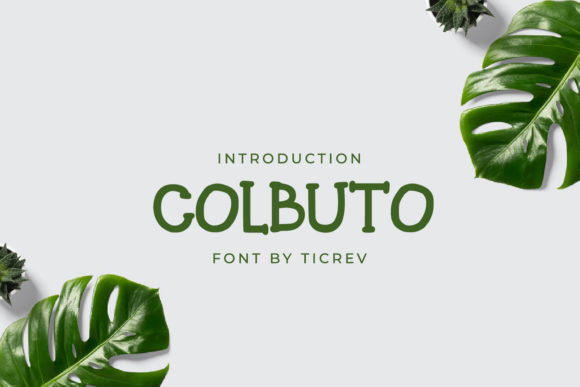
Colbuto: A Display Font That Elevates Handmade Creations
I was working on a small batch of soy candles for my seasonal collection, and I needed the perfect label to wrap them up in a cozy, inviting way. As I opened my font library, Colbuto caught my eye with its soft curves and gentle strokes. It felt like a warm hug in type—just what I needed to make my candle labels feel personal and approachable.
Colbuto is a display font that brings a sense of charm and simplicity to any design. Its clean lines and playful curves give it a versatile personality that works well across different handmade projects. Whether I'm designing greeting cards, wedding invitations, or printable wall art, Colbuto has always delivered a fresh, modern look without feeling too trendy or too plain.
Bringing Colbuto to Life on Handmade Products
I started by testing Colbuto on a few sample labels for my candles. The font’s rounded edges gave the labels a friendly, approachable vibe that matched the natural ingredients inside. I used it for the product name and a short tagline, keeping it simple but impactful. It didn’t feel cluttered, even when paired with minimal design elements.
Next, I tried using Colbuto on some birthday invitation mockups. I paired it with a clean sans serif font for the body text, which created a nice balance between decorative and readable. The combination worked well for both digital and printed versions, making it easy to use across different formats.
Colbuto also found its way onto a set of farmhouse-style signs I made for a local boutique. The font’s subtle elegance added character without overpowering the rustic background. I used it for titles like “Welcome” and “Thank You,” and it looked just right alongside hand-painted textures and wooden frames.
Using Colbuto Across Different Mediums
One of the things I love about Colbuto is how well it scales across different mediums. On small stickers, it remains legible and doesn’t get lost in the details. For larger pieces like wall art or packaging, it holds its shape and adds visual interest without overwhelming the design.
When designing planner pages, I used Colbuto for section headers and decorative accents. It gave the layout a cohesive, handcrafted feel that aligned with the overall theme of the planner. The font’s readability made it ideal for titles and headings, while still allowing for creative expression in the design.
I’ve also experimented with Colbuto in digital printables, such as printable wall art and holiday tags. It looks great in both color and black-and-white formats, which is a big plus when creating products that can be customized by customers. The font’s versatility makes it easy to adapt to different themes and occasions.
Font Pairing and Design Tips
Colbuto pairs beautifully with other fonts depending on the project. For a more modern look, I often pair it with a clean sans serif font like Montserrat or Helvetica. This combination works well for product labels, social media graphics, and packaging designs where clarity is key.
If I want something more elegant, I’ll go with a simple serif font like Georgia or Times New Roman. The contrast between Colbuto’s soft curves and the crisp lines of a serif font creates a balanced, professional appearance that’s perfect for wedding stationery or boutique branding.
For a more whimsical feel, I sometimes mix Colbuto with a handwritten font or a bold display font. This gives the design an extra layer of personality, especially for greeting cards, stickers, or seasonal items like Halloween tags or Christmas ornaments.
Readability and Practical Use
When using Colbuto on small stickers or product labels, I pay attention to the spacing and sizing to ensure it remains legible. I test it on different materials, like paper, vinyl, and fabric, to see how it performs in real-world conditions. It handles cuts from Cricut and Silhouette machines well, making it a reliable choice for cutting machine users.
For longer text, I avoid using Colbuto as the main body font since it’s designed for display purposes. However, it works perfectly for short phrases, names, titles, and decorative wording. I always check the included styles, alternates, ligatures, and swashes before finalizing a design, especially when creating products for sale or digital downloads.
Before selling any physical products, templates, or printables that include Colbuto, I make sure to review the font’s licensing terms. It’s important to confirm that commercial use is allowed and that the font supports all necessary characters and languages for the intended audience.
Colbuto has become a staple in my design toolkit, and I can’t imagine creating handmade products without it. Its ability to add personality, charm, and consistency to every project makes it a valuable asset for any maker or seller looking to elevate their brand and creative output.